

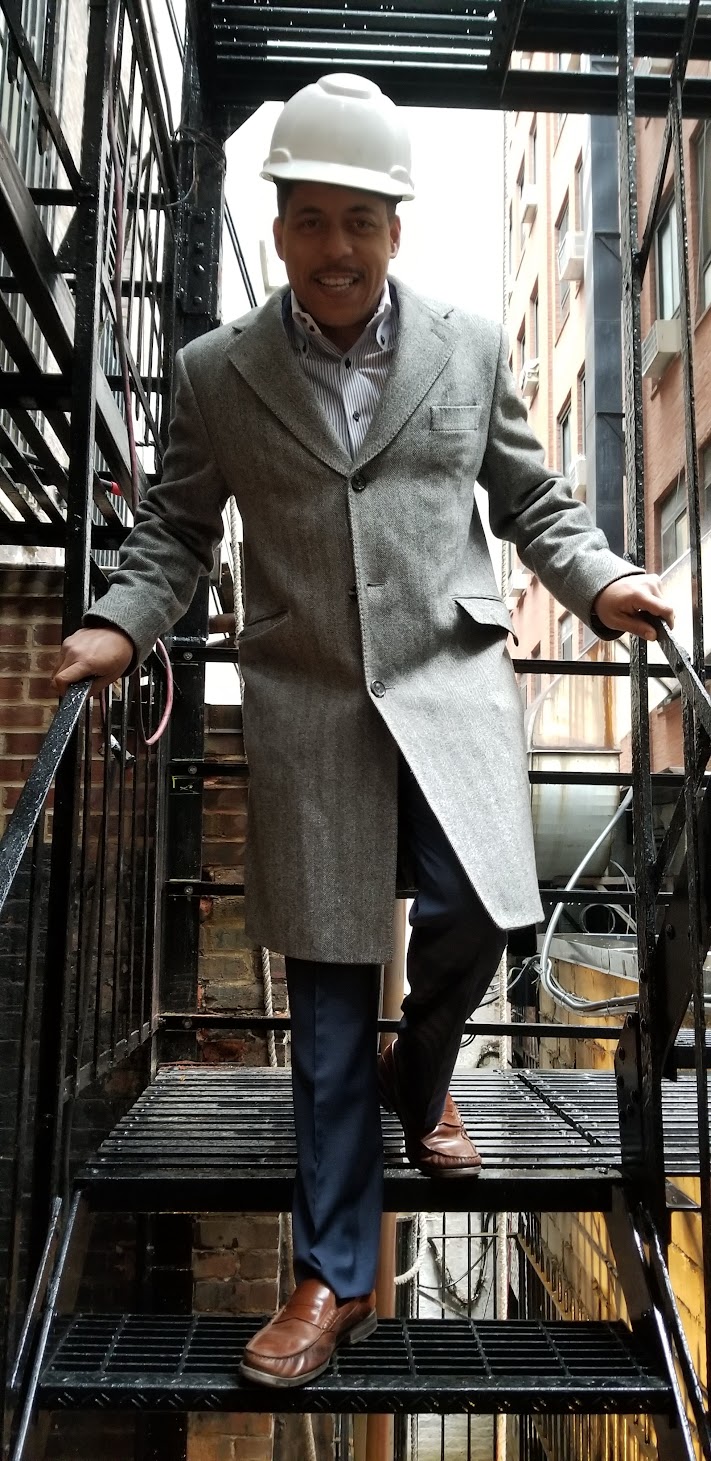
Aubrey Phillibert
Aubrey Phillibert brings an unusual combination of economics, real estate leadership, construction management, building science, sustainability, and organizational thinking to Kellets.
Read Aubrey’s full bio
Aubrey Phillibert brings an unusual combination of economics, real estate leadership, construction management, building science, sustainability, and organizational thinking to Kellets. He graduated summa cum laude in the top one percent of his class from the Commonwealth Honors College at the University of Massachusetts Amherst, where he studied Economics and completed departmental honors. His undergraduate thesis, A Case Study of the Caribbean Basin Initiative: Jamaica, Guyana, and Trinidad and Tobago, examined economic development through a subject that also connected deeply to his Jamaican heritage. That work earned recognition from the National Science Foundation and became part of an academic path focused on the relationship between economics, communities, opportunity, and the places people live.
Aubrey went on to pursue postgraduate studies in economics at Duke University, where his research interests turned toward the powerful relationship between housing and human outcomes. His work explored how the neighborhoods people grow up in, and even something as seemingly simple as a zip code, can influence educational attainment, economic opportunity, health, life expectancy, and long term quality of life. His studies drew on the broader neighborhood effects literature, including research examining whether concentrated communities help or hinder the people who live within them. That experience helped shape a belief that has followed him throughout his career: buildings and neighborhoods are never just physical structures. They directly affect people's lives.
After college, Aubrey entered the real estate industry working with a developer on major development projects before beginning a 17 year career with FirstService Residential. Over that period he progressed through increasingly senior management and people leadership positions, including Managing Director and Vice President. His career was centered not simply on managing properties, but on managing people, projects, clients, budgets, buildings, and the competing priorities that come with complex residential environments.
For more than a decade, Aubrey managed and oversaw multimillion dollar capital improvement projects throughout Manhattan. His work required coordination among boards, owners, architects, engineers, consultants, contractors, building personnel, residents, and internal teams while maintaining control of budgets, schedules, contracts, communication, and project risk. At the same time, he led teams of property managers and other professionals responsible for some of New York City's most demanding residential properties. By the time he became Vice President, he was overseeing a management team responsible for a portfolio of more than 2,500 residential units. Publicly documented initiatives under his leadership also produced millions of dollars in energy related savings.
That experience became an important foundation for Kellets. Aubrey spent years sitting on the owner's side of the table and learned to view construction from the perspective of the people responsible for the property, the money, the residents, and ultimately the outcome. He saw that successful projects depend as much on leadership, preparation, communication, documentation, financial discipline, and accountability as they do on the physical work itself. He also saw firsthand how stressful construction becomes when those things are missing.
His work increasingly focused on capital planning, energy conservation, building systems, infrastructure, and long term asset performance. As his career moved deeper into construction, Aubrey continued his formal training in construction management, site safety, scaffolding, HVAC and refrigerant systems, and general contracting. Kellets grew from that combination of institutional project management, technical curiosity, hands on construction experience, and a desire to create a better experience for homeowners.
The idea behind Kellets is straightforward: homeowners deserve the same level of planning, management, documentation, financial control, and accountability that should exist on the largest and most complicated capital projects. Aubrey's role therefore extends well beyond estimating or supervising construction. He works with the team on project strategy, problem solving, systems, technology, client experience, financial management, organizational development, and the continual improvement of how Kellets operates.
Aubrey believes a construction company should also be a learning organization. Problems should be examined rather than hidden. People should understand why they are doing something, not simply be told what to do. Information should move freely enough for good decisions to be made, and lessons from one project should become improvements on the next. Technology and artificial intelligence increasingly support that philosophy at Kellets, but for Aubrey the purpose of technology is ultimately human: better information, clearer communication, better decisions, less uncertainty, and a stronger relationship between the homeowner and the people working in their home.
Away from construction, Aubrey's curiosity has taken him into areas that do not normally appear on a contractor's résumé. He is a former EMT, and during a flight to Jamaica he once found himself putting that training to use when a passenger suffered a serious medical emergency. The experience reinforced something that has followed him from economics to property management to construction: preparation matters, knowledge has value when it can be put into practice, and when circumstances require someone to take responsibility, you step forward.
That philosophy sits at the center of Kellets today. Build carefully. Think critically. Communicate clearly. Keep learning. Take responsibility. And leave both the project and the organization better than you found them.